
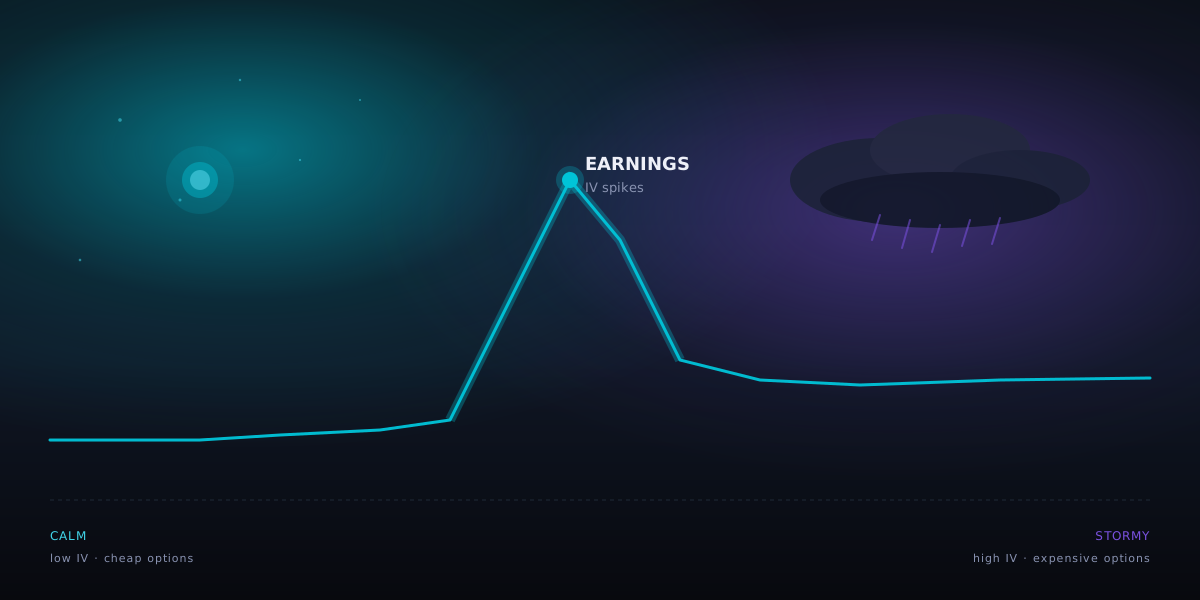
The weather forecast for a stock
Implied volatility — IV — is the market's best guess at how much a stock will bounce around between now and an option's expiry, expressed as an annualised percentage and baked into every option price on the chain.
Think of it like a weather forecast — not a prediction of which direction the rain's coming from, just how stormy things are going to be. When traders expect a stock to stay calm, IV sits low and options are cheap. When they expect fireworks — earnings around the corner, a Fed meeting on the calendar, a court ruling that could move the whole sector — IV spikes and the same option contract that was a few cents yesterday is suddenly a few dollars. Same chain, same strikes, very different price tag, depending on the mood.
The reason every option price on the board reflects this is that IV is the one input on the Black-Scholes pricing model that traders actually argue about — the spot price, the strike, the days-to-expiry and the risk-free rate are all known. Volatility is the one knob the chain is bidding on, and the value the chain settles on at any given moment is what we call “implied” volatility — the volatility implied by the current option price rather than measured from past stock movement.

Why it matters even if you never sell options
IV sets the price you pay for any option you buy and the premium you collect for any option you sell — ignore it and you'll consistently overpay for calls before earnings and underprice puts on quiet Mondays.
If you're buying a call to bet on a rally, high IV means you're paying up — the stock has to move more than the market already expects just to get you back to break-even. Low IV is the opposite: options are cheap, but the market is also yawning, so don't expect miracles. The trap most beginners fall into is buying calls right before earnings because that's when the “news” is — and discovering after the fact that they paid such a fat premium that even a 5% beat wasn't enough to make the call profitable. The forecast was already priced in; they bought the umbrella in the rain.
On the selling side the same thing flips in your favour. Selling premium when IV is high — say, on a stock with IV rank in the upper half of its 52-week range — gives you a richer credit to start with, and most of the move that pays for it has already been forecast by the chain. That's the entire rationale behind selling cash-secured puts and covered calls when vol is elevated and stepping back when it isn't.
IV rank: is today's IV actually high?
IV rank converts a raw IV number into a percentile of the stock's own 52-week range, so you can tell at a glance whether today's IV is high for that stock or just high in absolute terms.
Saying “IV is 40%” means almost nothing on its own — that's low for a high-flying tech name and high for a sleepy consumer staple. IV rank fixes this by asking a simple question: where does today's IV sit inside the same stock's range over the last twelve months? An IV rank of 80 means today's IV is higher than 80% of readings in that window — premiums are rich relative to the stock's own history. A rank of 20 means the chain is asleep. The number to track for premium-selling decisions is IV rank, not raw IV; the raw figure is just the absolute temperature, the rank is what tells you whether to bring a coat.
Try it on a real stock
The fastest way to feel IV move is to open the same chain twice a week for a month and watch it breathe.
Pull up any ticker's options chain and look for the IV column on the strikes nearest the current stock price. Note the number, the date, and the IV rank if your broker shows it. Open it again the day before the company's earnings; you'll see IV climb several points — sometimes ten or more — because the chain has priced in the expected swing. Open it the morning after the print, and IV collapses back down regardless of how the stock actually moved. That collapse is volatility crush, and it's the single most common reason newcomers buy a call ahead of earnings, get the direction right, and still finish red. The stock obeyed; the forecast didn't. If a term here feels foggy, the glossary has one-sentence definitions for every column the chain throws at you.